

Round Reptile Records
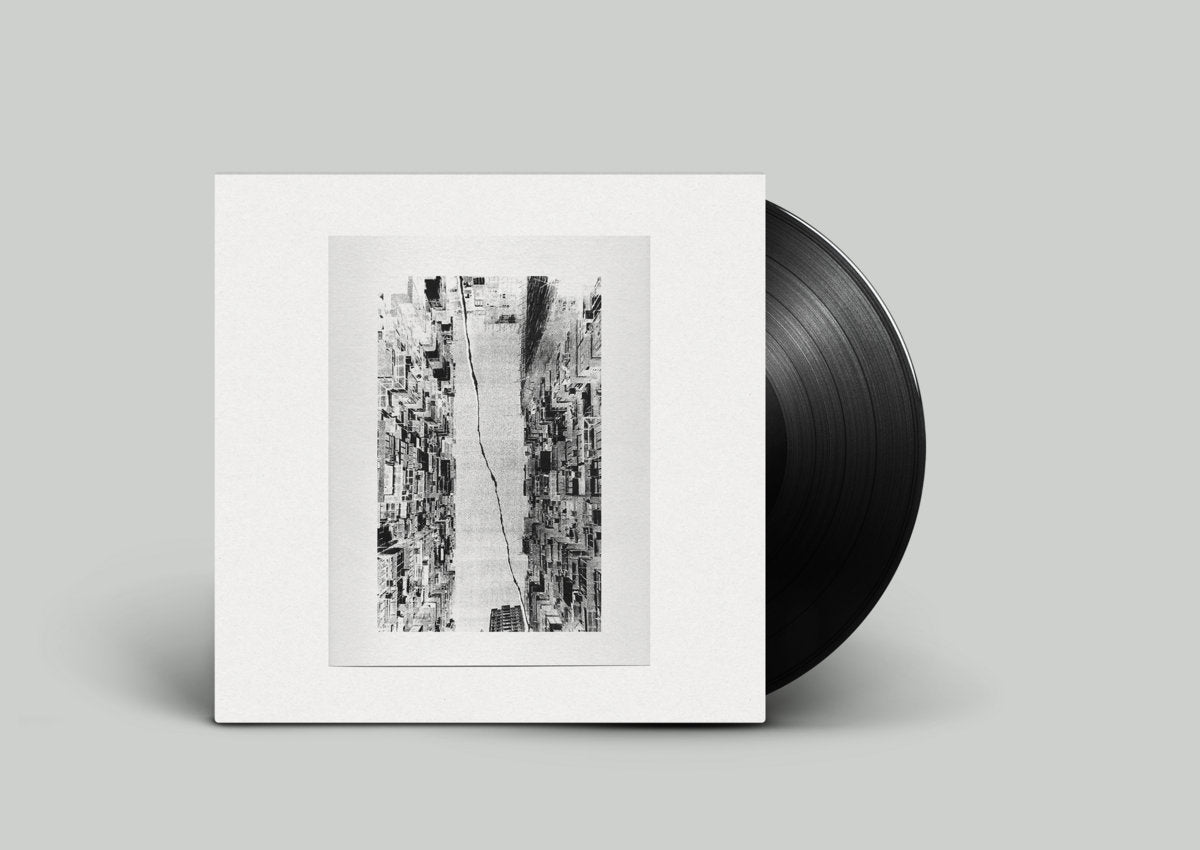
21/08/2026: Lawrence English - The Rest Is My Ghost (Black or Smoke Vinyl)
Regular price
$35.00 AUD
Regular price
Sale price
$35.00 AUD
Unit price
per
Tax included.
Couldn't load pickup availability
Slated for 21st of Aug arrival.
Please note : If you place a pre-order at the same time as in-stock items, your order will be shipped together when the pre-order arrives. Release dates are subject to change and will be updated on this listing.
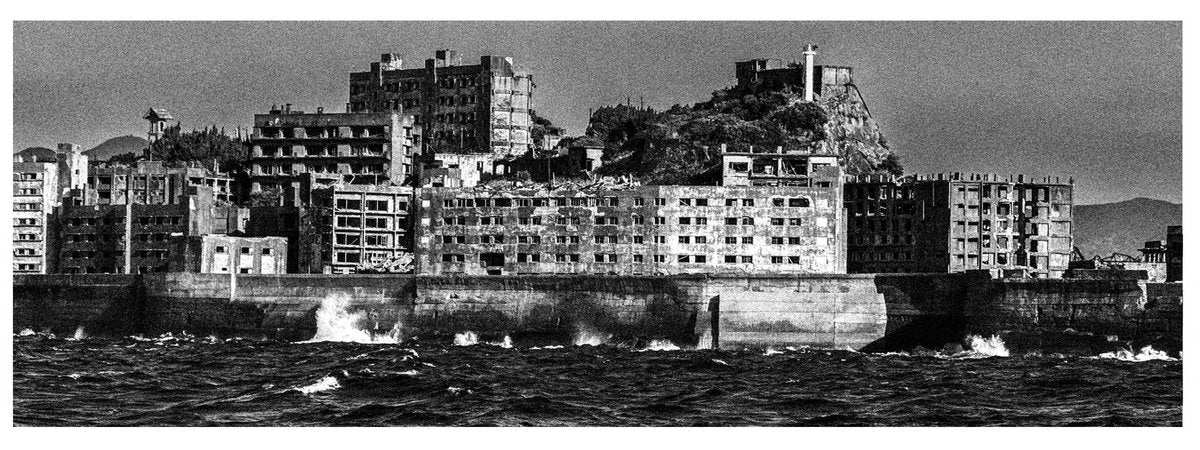
“Ruins are the style of our future cities, future cities are themselves ruins.” - Izosaki Arata
A Note From Lawrence English
Nostalgia is not an ideology, though in this moment, we could be mistaken for thinking it might be just that. Over the past years, the idea of nostalgia has been filtered through various political and technological lenses and has become a tool used for forgetting, rather than remembering. Instead of embracing histories’ complexities and inconsistencies, this version of nostalgia seeks only singular recollection. This contemporary phenomenon of nostalgia has become a methodology at best, and a weapon at worst, used to erode the past and project forward a collapsed and unimaginably sanitised version of things, places, and ways of being from former times. It’s this projection that sees it playing a mounting role in a social pathology associated with reducing the imagined possibilities of future.
The Rest Is My Ghost is a record that interrogates the manifestations of this reductive futuring and celebrates those that have tried (and failed), and those who continue to push back against decayed and revisionist positions. It’s a record that considers the weaponisation of nostalgia for the purposes of cloaking possible futures.
In recent times, I’ve proposed a term for this weaponised use of nostalgia, something I have called Acid Nostalgia. I offer it as a shorthand to describe the de-contouring of the future through a corrosive fixation on a flatten rendering of the preceding times. It is, in part, a certain type of lazy cultural scripting where tropes of the past are presented in the absolute, as empty pictorials; photocopies without any original from which to draw actual meaning, or useful detail.
Acid Nostalgia describes an increasingly common political projection of nostalgia that exists without any subjective connection to the memory surrounding and contained within it. Like acid poured onto a surface, this use of nostalgia seeks to erodes and smooth out the complexity and texture of lived connection and longing, which has until recently guided contemplations of nostalgia. Acid Nostalgia instead erases the texture of histories and de-contours the past, and in doing so dematerialises the horizon of possibility, which by its very nature marks the beginning point for any (and all) imaginable futures. Acid Nostalgia is a dreamless screen, where uncertainty, restlessness and aspiration are subjected to corrosion, breaking down and neutralising the wellspring of futures which are birthed from within the ambiguously charged, complex and at times chaotic atmospheres of the present.
The Rest Is My Ghost is not however some universal reading of these things and happenings. Rather it draws its breath from a very personal pathway carved through my own fraught experiences of nostalgia and framed through a disparate collage of chance encounters, situations, places and provocations. It takes oblique notes from civic and architectural references such as Japan’s Metabolist movement, Hong Kong’s ‘one line sky’ and Los Angeles’s vanished Sodium Vapour lights. It interpolates texts – factual and fictional – by authors such as Franco Berardi, Kate Crawford, JG Ballard, Katsuhiro Otomo, Mark Fisher and Alexei Yurchak who have each so wonderfully sought to rupture the familiarity of now, and push us towards other ways of imaging ourselves, our surroundings and our very ways of being in this world.
I also owe a debt of thanks to Adam Curtis in helping launch what has become this edition. It was his provocation, in a conversation we shared about an overwhelming and profound sense of uncertainty around being able to predict the immediate future and how to respond to that, which sparked the earliest inklings of this edition.
The Rest Is My Ghost is ultimately a record about the promise of constructions and connections to come, material, social and political. It's a record that accepts the fragility of failure as a source of ultimate potential, and a position from which the deepest freedom of imagination might be sought and summoned forth to conjure even the most unimaginable, (but) possible futures.
Credits
Written and Composed by Lawrence English at Negative Space
with
Chris Abrahams (The Necks) – Piano (9,10)
Tony Buck (The Necks) – Drums (2,8) Percussion(8,9), Gongs(8)
Madeleine Cocolas – Voice (7,8,10)
Mats Gustafsson – Saxophone (1,2)
Thor Harris - Hammer Dulcimer (2), Gongs (8,9), Vibes (2)
Lena Ito – Gamelan (5)
Chuck Johnson - Pedal Steel (2,3)
Peter Knight – Trumpet (2,4,8,9)
Sean Mackenzie – Trombone (2,6)
Brodie McAllister – Trombone (2,6)
Heinz Riegler – Guitar (2,9), Electronics (6,8)
Richard Sanderson – Trombone (2,6)
Rully Shabara – Voice (1,2)
The Australian Voices – Choir (1,3,9)
Vanessa Tomlinson – Gamelan (5), Concert Bass Drum (1,9)
Norman Westberg (Swans) – Guitar (2)
A Note From Lawrence English
Nostalgia is not an ideology, though in this moment, we could be mistaken for thinking it might be just that. Over the past years, the idea of nostalgia has been filtered through various political and technological lenses and has become a tool used for forgetting, rather than remembering. Instead of embracing histories’ complexities and inconsistencies, this version of nostalgia seeks only singular recollection. This contemporary phenomenon of nostalgia has become a methodology at best, and a weapon at worst, used to erode the past and project forward a collapsed and unimaginably sanitised version of things, places, and ways of being from former times. It’s this projection that sees it playing a mounting role in a social pathology associated with reducing the imagined possibilities of future.
The Rest Is My Ghost is a record that interrogates the manifestations of this reductive futuring and celebrates those that have tried (and failed), and those who continue to push back against decayed and revisionist positions. It’s a record that considers the weaponisation of nostalgia for the purposes of cloaking possible futures.
In recent times, I’ve proposed a term for this weaponised use of nostalgia, something I have called Acid Nostalgia. I offer it as a shorthand to describe the de-contouring of the future through a corrosive fixation on a flatten rendering of the preceding times. It is, in part, a certain type of lazy cultural scripting where tropes of the past are presented in the absolute, as empty pictorials; photocopies without any original from which to draw actual meaning, or useful detail.
Acid Nostalgia describes an increasingly common political projection of nostalgia that exists without any subjective connection to the memory surrounding and contained within it. Like acid poured onto a surface, this use of nostalgia seeks to erodes and smooth out the complexity and texture of lived connection and longing, which has until recently guided contemplations of nostalgia. Acid Nostalgia instead erases the texture of histories and de-contours the past, and in doing so dematerialises the horizon of possibility, which by its very nature marks the beginning point for any (and all) imaginable futures. Acid Nostalgia is a dreamless screen, where uncertainty, restlessness and aspiration are subjected to corrosion, breaking down and neutralising the wellspring of futures which are birthed from within the ambiguously charged, complex and at times chaotic atmospheres of the present.
The Rest Is My Ghost is not however some universal reading of these things and happenings. Rather it draws its breath from a very personal pathway carved through my own fraught experiences of nostalgia and framed through a disparate collage of chance encounters, situations, places and provocations. It takes oblique notes from civic and architectural references such as Japan’s Metabolist movement, Hong Kong’s ‘one line sky’ and Los Angeles’s vanished Sodium Vapour lights. It interpolates texts – factual and fictional – by authors such as Franco Berardi, Kate Crawford, JG Ballard, Katsuhiro Otomo, Mark Fisher and Alexei Yurchak who have each so wonderfully sought to rupture the familiarity of now, and push us towards other ways of imaging ourselves, our surroundings and our very ways of being in this world.
I also owe a debt of thanks to Adam Curtis in helping launch what has become this edition. It was his provocation, in a conversation we shared about an overwhelming and profound sense of uncertainty around being able to predict the immediate future and how to respond to that, which sparked the earliest inklings of this edition.
The Rest Is My Ghost is ultimately a record about the promise of constructions and connections to come, material, social and political. It's a record that accepts the fragility of failure as a source of ultimate potential, and a position from which the deepest freedom of imagination might be sought and summoned forth to conjure even the most unimaginable, (but) possible futures.
Credits
Written and Composed by Lawrence English at Negative Space
with
Chris Abrahams (The Necks) – Piano (9,10)
Tony Buck (The Necks) – Drums (2,8) Percussion(8,9), Gongs(8)
Madeleine Cocolas – Voice (7,8,10)
Mats Gustafsson – Saxophone (1,2)
Thor Harris - Hammer Dulcimer (2), Gongs (8,9), Vibes (2)
Lena Ito – Gamelan (5)
Chuck Johnson - Pedal Steel (2,3)
Peter Knight – Trumpet (2,4,8,9)
Sean Mackenzie – Trombone (2,6)
Brodie McAllister – Trombone (2,6)
Heinz Riegler – Guitar (2,9), Electronics (6,8)
Richard Sanderson – Trombone (2,6)
Rully Shabara – Voice (1,2)
The Australian Voices – Choir (1,3,9)
Vanessa Tomlinson – Gamelan (5), Concert Bass Drum (1,9)
Norman Westberg (Swans) – Guitar (2)